Could Employee Time and Attendance Tracking Reveal Where Workforce Efficiency Is Being Lost?
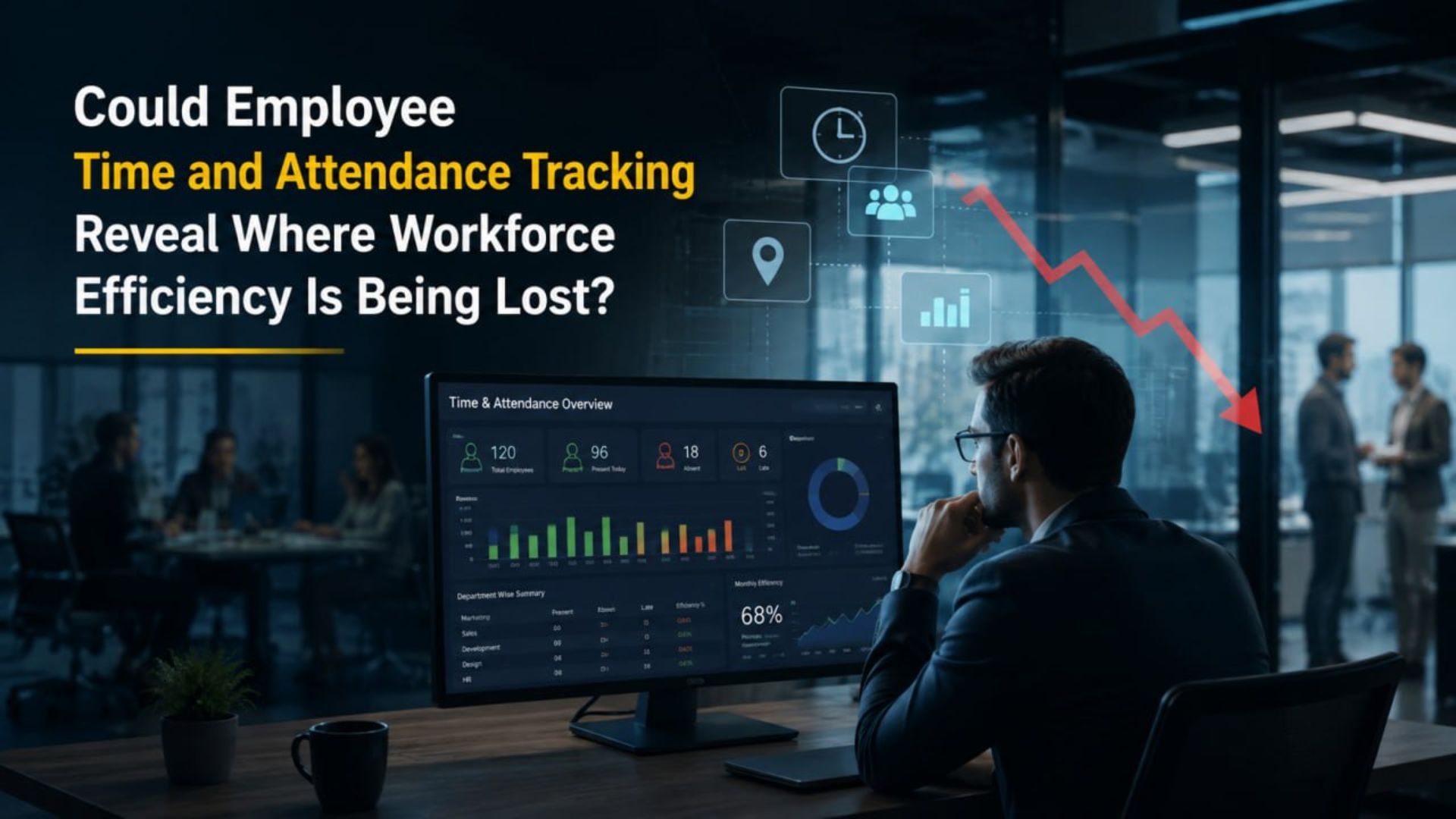
Where does workforce efficiency actually disappear? It rarely happens through one dramatic failure. More often, small gaps accumulate: employees spend time correcting attendance records, managers chase missing timesheets, overtime goes unnoticed, schedules do not match actual work patterns, and payroll teams repeatedly reconcile inconsistent data. Employee Time and Attendance Tracking can make these gaps easier to see by turning scattered attendance information into a structured source of workforce insight. Yet visibility alone does not create efficiency. Businesses need accurate records, sensible policies, employee transparency, and thoughtful analysis to understand what the data really means. When implemented properly, time and attendance information can help organizations distinguish genuine operational problems from assumptions and make better decisions about people, schedules, costs, and workflows.
Where Is Workforce Efficiency Really Being Lost?
Workforce inefficiency is not always obvious. A manager may notice that a project is consistently delayed but overlook the scheduling problems contributing to it. An HR team may spend several hours each month correcting attendance records without recognizing that the underlying process is creating unnecessary administrative work.Time data can expose these patterns.For example, imagine a company where employees frequently submit corrections because scheduled shifts do not reflect actual working arrangements. The immediate issue appears to be inaccurate attendance. The deeper issue may be poor schedule planning.Similarly, repeated overtime does not automatically mean employees are inefficient. It could indicate understaffing, unrealistic deadlines, uneven workloads, or inefficient processes.The value of workforce data, therefore, comes from interpretation, not simply from collection.
What Can Time and Attendance Data Reveal?
Reliable attendance information can provide managers with a clearer picture of recurring workforce patterns. Start and end times can highlight scheduling inconsistencies, while overtime records can reveal where workload demands are exceeding planned capacity. Absence patterns may indicate operational pressure or scheduling challenges. When combined with a performance tracking system, these insights can provide a broader view of workforce trends and help managers identify areas that may require attention.The important question is not simply, “Who worked how many hours?”A better question is, “What does this pattern tell us about the way work is organized?”That shift in perspective makes attendance information considerably more useful. It moves the conversation away from monitoring individuals and toward understanding operational conditions.Businesses can examine whether particular shifts consistently require overtime, whether certain processes create frequent delays, or whether managers are spending disproportionate time resolving administrative issues.
How Can Businesses Turn Visibility Into Efficiency?
The first step is establishing clear attendance rules. Employees should understand when working time begins and ends, how breaks are handled, how overtime is approved, and what happens when an attendance record is incorrect.The second step is choosing a process that fits the organization. A small office with predictable schedules may have different requirements from a manufacturing operation, retail business, or distributed workforce.The third step is reviewing exceptions rather than drowning managers in information. A useful system should make unusual patterns easier to identify without requiring someone to manually inspect every record.For example, if most employees finish within scheduled hours but one department consistently generates overtime, management can investigate the reason. Perhaps demand has increased. Perhaps staffing levels need adjustment. Perhaps the workflow itself needs redesigning.The data creates the question; management still needs to find the answer.
What Does Better Workforce Efficiency Look Like?
Efficiency should not be confused with making employees work longer hours.A business can become more efficient by reducing unnecessary administrative work, improving schedules, minimizing payroll corrections, balancing workloads, and identifying process bottlenecks.Consider an HR team that previously spent several hours each pay period comparing spreadsheets, messages, and manager approvals. A more structured attendance process could reduce that reconciliation work. The benefit is not merely faster recordkeeping. HR gains time that can be redirected toward recruitment, employee development, workforce planning, or other higher-value responsibilities.The same principle applies to managers. If attendance information is automatically organized and exceptions are clearly presented, managers can spend less time searching for information and more time addressing genuine operational issues.You can also watch: EmpMonitor|Leading Employee Engagement and Workforce Productivity Tool
Conclusion
Employee Time and Attendance Tracking can reveal where workforce efficiency is being lost, but the real value lies in what organizations do with that visibility. Accurate time information can expose scheduling problems, recurring overtime, administrative waste, and workflow inconsistencies that might otherwise remain hidden. The strongest approach combines dependable data with human judgment, transparent policies, and regular process reviews. Rather than asking how closely employees can be monitored, businesses should ask how intelligently workforce information can be used. Review your current attendance process, identify its biggest sources of friction, and explore where greater visibility could drive measurable operational improvements.
FAQs
What is Employee Time and Attendance Tracking?It records employee work hours, breaks, overtime, absences, and attendance for payroll, scheduling, and workforce management.How much does time and attendance software cost?Costs vary by employees, features, integrations, and pricing plans. Compare software costs with the time and money saved through automation.Is automated attendance better than manual tracking?Usually, yes. Automation reduces repetitive work and errors, but it still requires clear policies, proper setup, and regular review.
